Growing for the Future: Sustainability in Our School Garden
Walk around our school garden and you’ll find much more than vegetables growing in raised beds and plants filling our polytunnels.
You’ll find compost being made from our school snack waste, our worm farm working away, rainwater being collected, materials being reused, flowers buzzing with pollinators and spaces created for wildlife.
You’ll also find children sowing seeds, caring for plants, nurturing wildlife, harvesting food and discovering what happens when we work with nature rather than against it.
Sustainability has become a natural part of our school garden. It isn’t something we simply talk about; it is something the children experience as they garden.
Growing food and valuing what we grow
At the heart of our garden is growing food.
Our raised beds and polytunnels give children the opportunity to grow a wide variety of fruit and vegetables, taking them from seed to harvest. They learn that food doesn’t simply appear on a supermarket shelf — it takes soil, water, sunshine, time and care to produce it.
Growing our own food also gives us opportunities to talk about seasonality, food miles, reducing waste and appreciating the food we have. Where possible, produce from our garden makes its way back into school, helping children make the connection between growing, harvesting and eating.
Seed saving allows us to grow plants again, showing children how one growing season can lead into the next.
From food waste to healthy soil
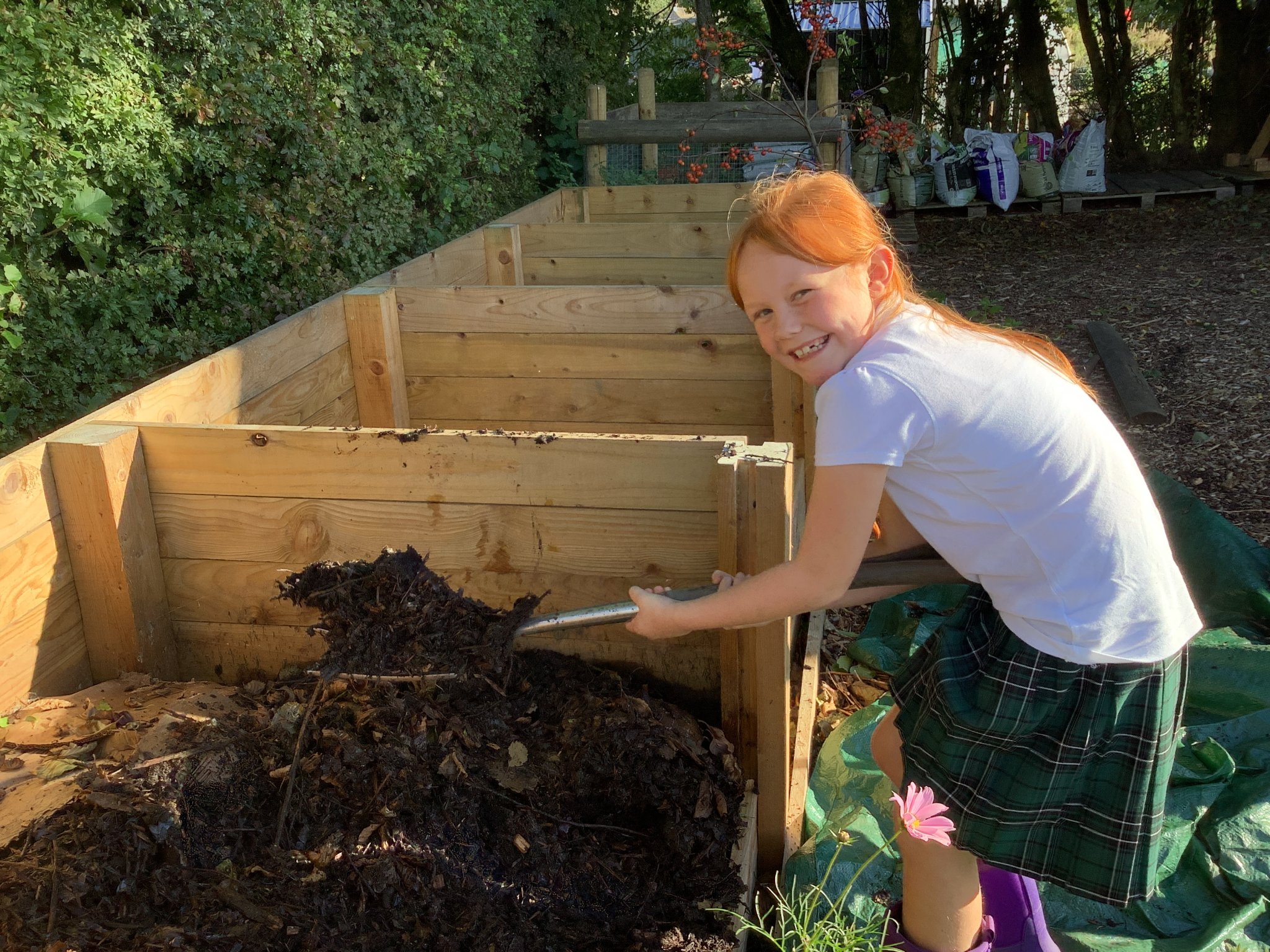
Our four-bay composting system and worm farm are important parts of our sustainable approach.
Every day, fruit and vegetable waste from snack time is collected and added to our composting bays. Our worm farm gives children another opportunity to see how food waste can be broken down naturally by worms and transformed into valuable worm castings for the garden.
Over time, the material in our compost bays breaks down and becomes something valuable that we can return to our growing areas to help build healthy soil.
Food waste → compost → healthy soil → healthy plants → food.
The children can see this cycle happening right in front of them, helping them understand that what we might think of as waste can be turned into something that helps our garden grow.
Making the most of what we have
Sustainability is also about looking at what we already have and finding ways to make the most of it.
Rainwater is collected and used around the garden wherever possible, making the most of a natural resource.
Reclaimed timber, pallets, containers and donated materials have all been given new purposes throughout the garden rather than simply being discarded.
Even tomato tins from our school kitchen have been given a new lease of life as growing containers for tomato plants. Something that could have become waste is instead reused in the garden, showing children that everyday items can often have another purpose before they are recycled.
Luffas are another crop we grow, which the children can watch develop from seed into mature fruits. Once dried and processed, they become natural, reusable eco-sponges. This gives the children a wonderful example of how something we can grow ourselves can have a practical use and provide a more sustainable alternative to commercially produced sponges.
The sunflower seeds we save are used to make bird seed feeders, giving the children another opportunity to see how something grown in our garden can be used to support wildlife. We can grow, save and reuse our own seeds, creating a simple cycle that connects growing, sustainability and caring for nature.
Comfrey and nettles provide the ingredients for our own natural plant feeds. The children can see how plants that might otherwise be overlooked can be turned into useful fertiliser for our crops. It’s another example of working with natural resources, reducing our reliance on bought products and returning nutrients to the garden.
A garden for wildlife
Our garden isn’t just for growing food. We want it to be a place where wildlife can thrive too.
A range of habitats and wildlife-friendly spaces have been created, including our pollinator border, bee and bug hotels, ladybird house, bird boxes, hedgehog houses, wildlife pond and Moon Garden for night-time pollinators.
Our bee and bug hotels are another example of giving materials a new life while creating valuable habitats for insects.
We garden organically and don’t use pesticides. Companion planting helps us work with nature, while beneficial insects and natural predators help maintain a healthy balance within the garden.
Ladybird larvae are another part of our wildlife learning. The children are given the opportunity to nurture ladybird larvae, watching them develop and transform into fully grown ladybirds. Once they have matured, they are released into our garden, where they can become valuable natural predators of aphids and other garden pests.
It’s a wonderful way of showing children that we don’t always need to reach for a chemical solution. By supporting beneficial wildlife, we can work with nature and encourage it to do some of the gardening for us.
Our wildlife container pond provides another valuable habitat, while log piles offer shelter and important habitats for insects and other small creatures. Together, these spaces help children understand that a productive garden can also be a thriving home for wildlife.
Learning through gardening
The children are learning all the time as they garden — sometimes without even realising it.
They are discovering more about plants, soil, food, wildlife and habitats through real experiences, while naturally making connections with their wider learning in school.
They can see sustainability happening as part of everyday gardening:
Food waste becomes compost.
Compost helps create healthy soil.
Seeds become plants and can produce seeds for another growing season.
Sunflowers provide seeds that can be saved and used to support birds.
Comfrey and nettles become natural plant feeds.
Luffas become reusable eco-sponges.
Old containers become places to grow.
Ladybird larvae become adult ladybirds that can help us naturally manage pests.
Rainwater is collected and returned to the garden.
These are simple things, but together they help children understand that everything is connected and that small choices can make a difference.
A question about an insect, harvesting a crop, watching seeds develop or discovering what lives in the compost can lead to conversations and investigations that simply wouldn’t happen in quite the same way inside a classroom.
Our garden has also grown through the support of our wider community, with people sharing their time, knowledge, plants and materials.
Growing for the future
Our school garden is still growing, and so is our understanding of what it means to garden sustainably.
There is always more to learn, more to improve and more ways to support the natural world around us. But if our children leave school understanding where their food comes from, valuing wildlife and knowing that they can make a difference, then our garden will have achieved something truly worthwhile.
We aren’t just growing plants. We’re growing understanding, responsibility and a connection with nature that we hope will stay with our children for years to come.